The Power of Precision: A Guide to Infrared (IR) 3D Scanning
In the rapidly evolving world of 3D scanning, the user has many tools at their disposal. Achieving professional-grade results has never been more accessible. But for medical and general purpose indoor scanning, one technology is the standard: Infrared (IR) 3D Scanning.
What is IR 3D Scanning?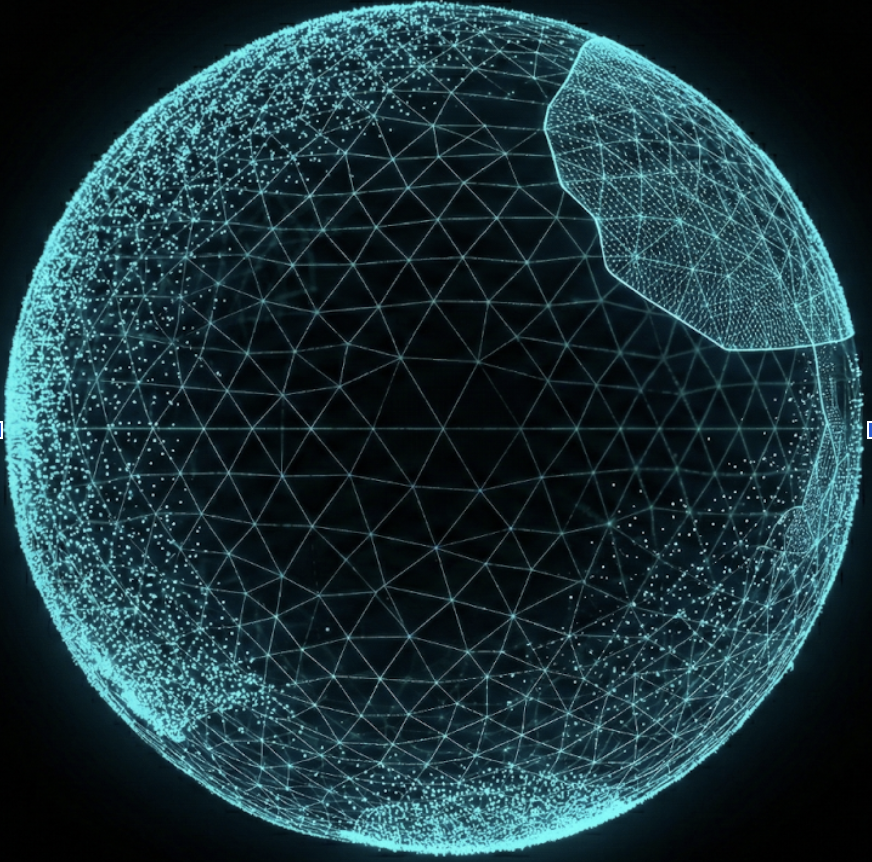
At its core, Infrared 3D scanning is a non-contact, active scanning technology. Unlike traditional cameras that rely on visible light, IR scanners utilize invisible infrared light (via LEDs or lasers) to project patterns onto a subject. The scanner then captures how these patterns deform to generate a detailed point cloud—a digital map of thousands of individual data points in 3D space.
Common Methodologies
- Structure Light (White Light/Blue Laser): This method uses bright lights to project a speckle pattern and capture high-detail data. The blue laser variant uses high powered lasers to project a grid pattern, and are common in precision engineering.
- Structured Light (Infrared): Like standard structure light scanning, projects a speckle pattern to capture high detail data. However, in this method the projector uses IR light, which is safer for scanning human tissue and can be used to scan the face without risk to the human eye.
- Photogrammetry - Uses hundreds of high resolution photos, each taken from a different position, to create highly detailed 3D models. While photogrammetry has many applications in gaming, VR, even real estate, photogrammetry has no scaling information by default, making fabricating parts or othotics difficult.
- Time-of-Flight (ToF): This sensor measures the exact time it takes for an IR pulse to travel to an object and back. It is the gold standard for scanning large-scale structures like buildings or rooms.
Why Choose Infrared?
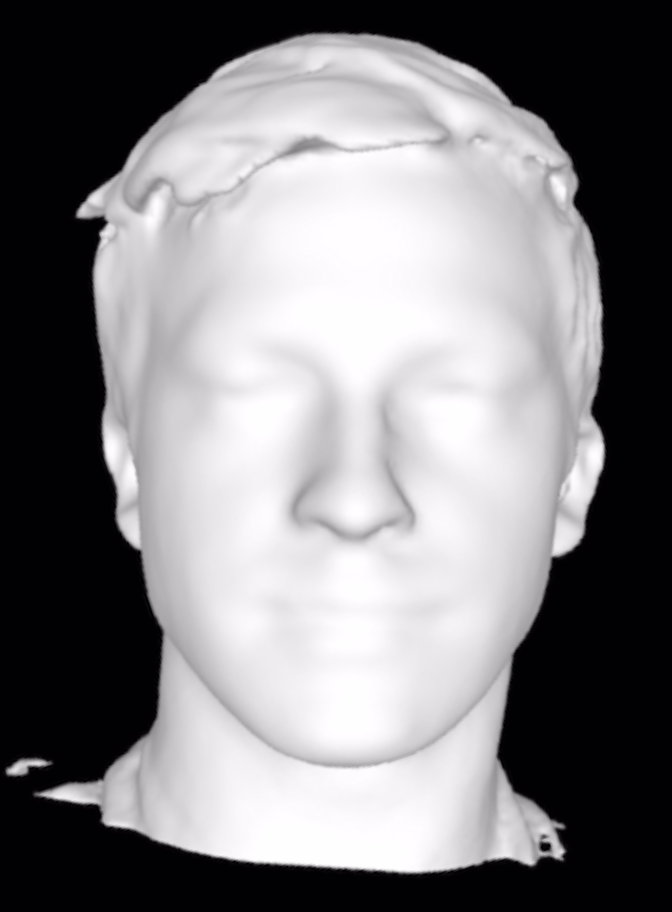
Infrared technology is exceptional for capturing "difficult" subjects like the human body, hair, and dark or reflective surfaces. Because it operates on a light spectrum invisible to the human eye, it is less sensitive to indoor light interference and offers several distinct advantages:
- The New Gold Standard for Healthcare
IR 3D scanning is heavily utilized in the medical field to design customized prosthetics, orthopedic casts, and orthotics. Because the process is non-contact and instantaneous, clinicians can capture a patient's anatomy with sub-millimeter accuracy without the discomfort of traditional plaster casting or the time-consumption of traditional tape measurements. - Safety and Comfort for Living Subjects
Since IR light is invisible and harmless, it is the safest choice for scanning people and animals. It allows for high-quality facial recognition and animation body-mapping without "dazzling" or blinding the subject with bright flashes of white light. - Cultural Heritage & Preservation
Fragile artifacts require a "hands-off" approach. IR scanning allows historians to digitize, archive, and virtually restore ancient items without ever touching the physical surface, ensuring digital preservation for generations to come.
Important Considerations
- Scanning out of doors: The sun contains a large amount of IR light. We recommend scanning in indirect sunlight or after the sun sets when scanning out of doors. Additionally, Structure offers an 'outdoor' setting, which increases the camera's power and decreases its shutter speed to better deal with sunlight.
- Mirrors: An issue shared with all structured light scanning, mirors or reflective surfaces reflect light and therefore interfere with scanning.
- Black colored objects: Black absorbs light and especially IR light. Structure allows developers and users to use special settings like 'Dark Object' to handle the color black.
To Sum Up
Structure light scanning remains the best tool for creating accurate, detailed 3D meshes. IR structured light is even better for scanning indoors, especially for scanning delicate objects or the human body, as it is both easy on the eyes and skin while providing a high degree of precision.