From Photosculpture to Pocket LiDAR: The Evolution of 3D Scanning
Imagine walking up to a historic statue, waving your phone in front of it for thirty seconds, and walking away with a perfect digital replica that you can 3D print or drop into a video game. It sounds like science fiction, but this is the reality of 3D scanning in 2026.
3D scanning is the process of capturing the shape and appearance of a physical objects to create a digital "twin."The technology has been quietly evolving for 60 years, moving from large mechanical machines to the pockets of nearly every smartphone user today.
How Does It Work? The Mechanics of "Seeing" in 3D
In 2026, the world of 3D scanning is dominated by a few standard technologies.
Contact Scanning: The Physical Touch
This is the most traditional method and is still the gold standard for extreme precision in manufacturing.
- Coordinate-Measuring Machines (CMM): Instead of using light, these machines use a physical probe (often a tiny, hard ruby sphere) to touch the object. As the probe moves across the surface, it records the exact 3D coordinates of every touchpoint. It’s slow and can’t be used on soft items, but it is accurate to within a fraction of a human hair.
Active Scanning: Bringing Your Own Light
Active scanners are like "flashlights" that talk back. They emit their own energy (usually lasers or light patterns) and measure how that energy interacts with the object.
- Structured Light (The "Grid" Method):
- Imagine projecting a perfectly straight grid of light onto a person's face. Where the face curves—like the nose or chin—the grid lines will bend. The scanner’s cameras capture these distortions and calculate exactly how far away every point on that face is.
- Infrared (IR) Scanning (The "Invisible" Method)
 :
:
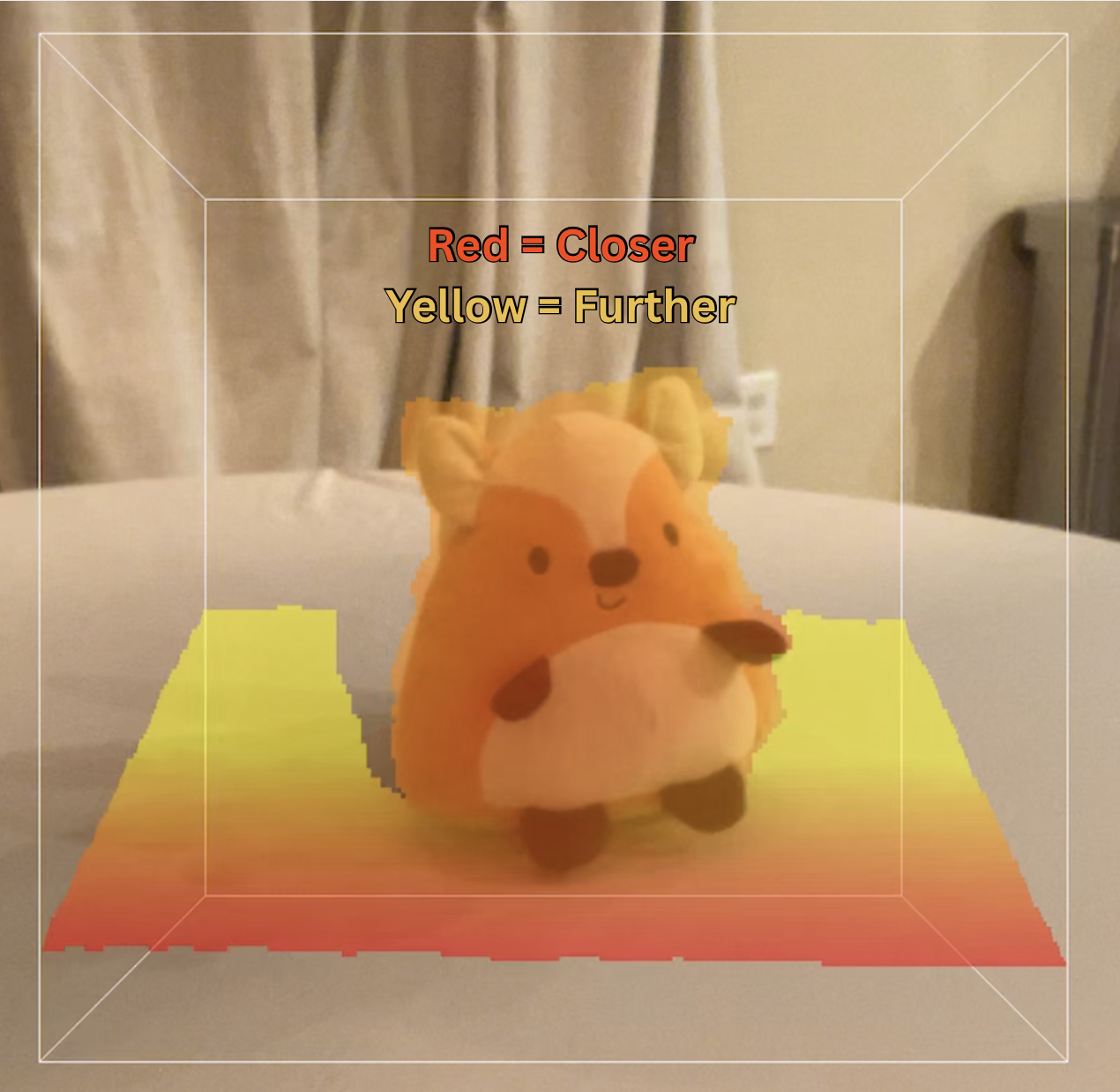
- This is a game-changer for scanning people. It works like structured light or laser scanning but uses light from the infrared spectrum, which is invisible to the humaneye. This allows for scanning in total darkness and is much more comfortable for human subjects, as there are no blinding flashes or bright laser lines. If you have an iPhone, you are already familiar Infrared Scanning, as its a keep component in Apple's TrueDepth Facial recognition system.
- Time-of-Flight & LiDAR (The "Stopwatch" Method):
- Mostly used for big things like buildings, this scanner fires a pulse of light and literally times how long it takes to bounce off a surface and return. Since light travels at a constant speed, the scanner acts like a high-speed stopwatch to calculate distance. But since light moves so fast, the technology really only comes into its own when scanning large spaces, and in general LiDAR is considered less accurate than IR or white light scanning.
Passive Scanning: The Power of Observation
Passive scanners don’t emit anything; they simply "watch" the world around them using natural light, much like our own eyes do.
- Photogrammetry (The "Digital Puzzle"):
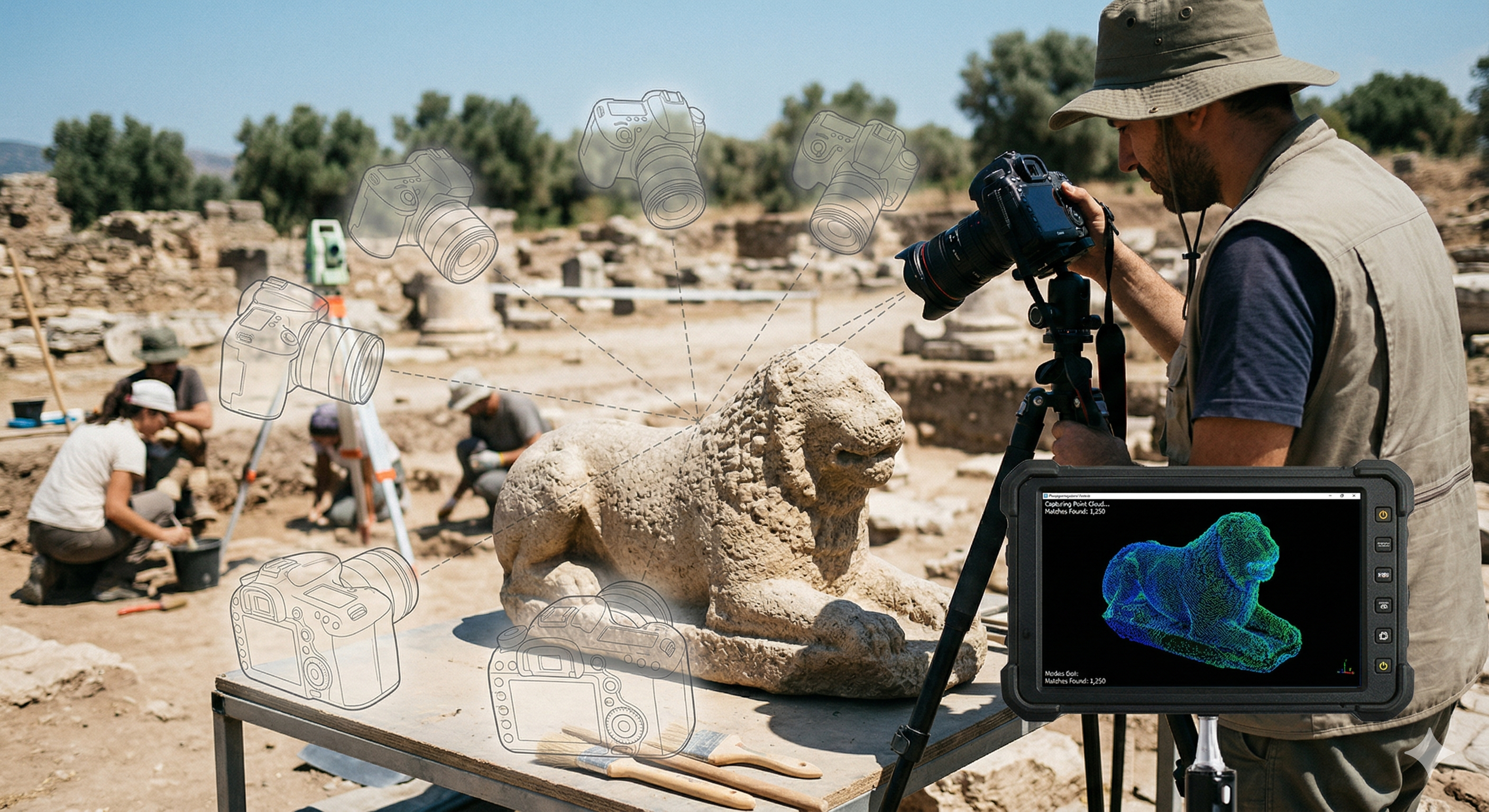
- By taking dozens or hundreds of standard 2D photos from every possible angle, software identifies "matching points" across the images. It then calculates the 3D position of those points by seeing how they move relative to each other as the camera moves. Photogrammetry can create very beautiful models, however, combing hundreds of pictures into a single 3D file is time consuming and requires large amounts of computing power. Additionally, photogrammetry scans have no innate 'scale' which can make creating accurate 3D models from photogrammetry scans difficult.
3D Scanning in the Wild
Today, this technology is transforming how we build, heal, and play:
- Construction & Engineering: Engineers use LiDAR to create "as-built" models of bridges and skyscrapers, ensuring that new renovations fit perfectly with existing structures.
- Healthcare: 3D scanning allows doctors to create custom-fit prosthetics and dental implants that are perfectly contoured to a patient’s unique anatomy.
- Entertainment & Gaming: Digital artists use photogrammetry to scan real-world actors and environments, creating the hyper-realistic worlds you see in modern video games and VFX-heavy movies.
- The New Frontier (AI & 3DGS): Emerging techniques like 3D Gaussian Splatting (3DGS) use AI to turn smartphone videos into interactive 3D scenes almost instantly—perfect for the future of online shopping and AR.
Summary: Choosing Your Technique
|
Technique |
Best For |
Key Advantage |
|
Laser (LiDAR) |
Buildings, landscapes, topography |
Massive range and spatial accuracy |
|
Structured Light/Infrared |
Small parts, medical, engineering |
Extreme geometric detail |
|
Photogrammetry |
Art, artifacts, video games |
Superior color and texture realism |
|
AI-Based (3DGS) |
Quick web assets, Social Media/AR |
Lightning-fast processing |
The Big Picture
We are no longer limited by the "flat" world of 2D images. 3D scanning has effectively bridged the gap between the physical and the digital, making our world more editable, archivable, and accessible than ever before. Whether we are preserving ancient ruins or designing the next generation of jet engines, we are finally seeing the world in all its dimensions.